

The Italian Greyhound, or Piccolo Levriere, is one of the oldest dog breeds in the world. Drawings of sighthounds resembling the modern day Italian Greyhound are found on Pompeiian frescoes dating back 2000 years. They are also painted on ancient Egyptian artwork from roughly 6000 years ago. 1 They were bred to hunt hare and rabbits, but were kept mostly as a companion dog. They were popular amongst European royalty, including Queen Victoria and King Louis XIV.2
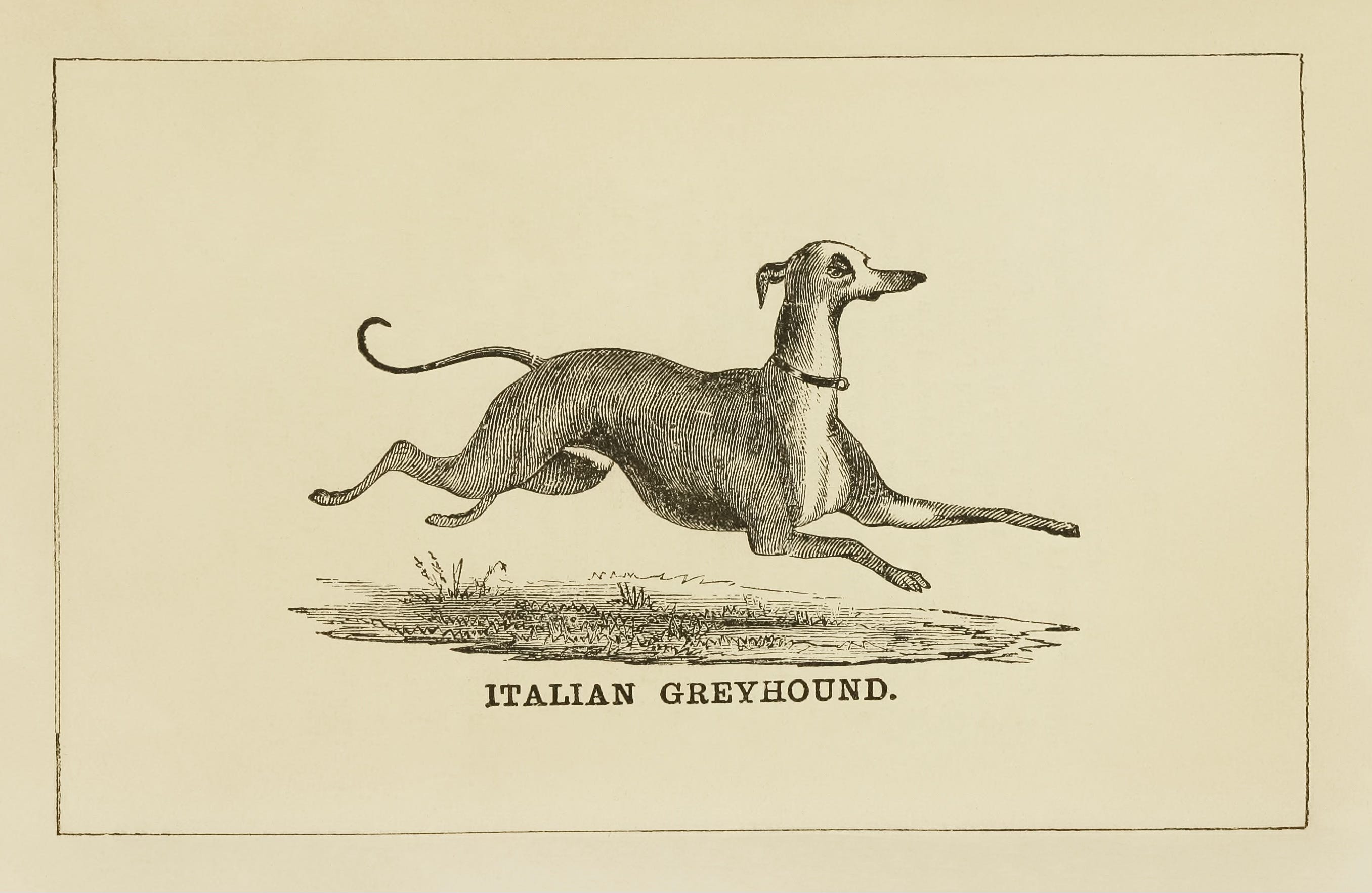
Today, Italian Greyhounds are enjoyed by thousands in the United States and around the world. They have been recognized by the American Kennel Club since 1886 and their popularity as a family pet has grown in the last five years.3 They are true sighthounds, but are very content with being lap dogs, provided they get enough daily exercise. Sighthounds use their keen sense of sight, speed, and strong prey drive to hunt down small animals. Please refer to my podcast with Gary Flynn where we talk about different hunting dog breeds.
Italian Greyhounds are the smallest member of the sighthound family weighing between 7 and 14 lbs.4 Sighthounds include well known breeds such as Greyhounds, Whippets, Afghan Hounds, Irish Wolfhounds and Salukis. All of these breeds have bodies that are built for speed with long slender legs and deep chests. The Greyhound is the fastest dog breed in the world reaching speeds of up to 45 miles per hour.5 The Italian Greyhound can reach up to 35 mph.6 They look like cheetahs running through the savanna. Whereas the Greyhound is faster than the Italian Greyhound, its endurance is not as great.
My guest, Cheryl Bendik, is a proud pet parent of two Italian Greyhounds, Mia and Luna. Cheryl was intrigued by the breed when she met two of them who belonged to her son’s girlfriend at the time. She kept wanting to borrow them until her son convinced her to get her own. Cheryl contacted a breeder but had to wait quite some time for one. In the meantime, Cheryl decided to adopt one. As fate would have it, as soon as she adopted Luna, Mia was born two weeks later! Luna is a Beagle/Italian Greyhound mix. Her most noticeable feature is her floppy Beagle ears, but she has the body of an Italian Greyhound. Mia and Luna are eight months apart and have a very close bond. When they were little, they both loved to run around and zip in and out of each other looking like a chocolate and vanilla swirl ice cream cone.
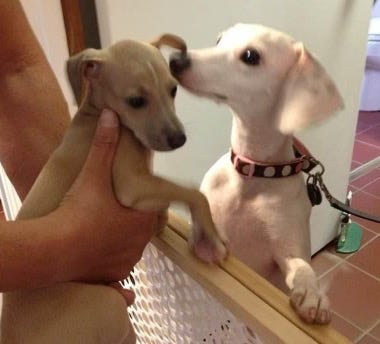
Luna was placed in a kill shelter in Columbus by a family with small children. She was then transported up to Vermilion, Ohio where Cheryl adopted her. She had a scar on her head from a previous injury and was very fearful of children and small women with blond hair. She also did not like noisy toys. She still is leary of noisy toys and young children with erratic movements. She lost her fear of small blonde women later in life. Thank goodness Luna ended up in her forever home with Cheryl!
Luna has the temperament of an Italian Greyhound and the prey drive of a Beagle. Cheryl says Luna’s nose is always to the ground like a Beagle’s and has brought home several “presents” after a romp in the backyard. Chipmunks, baby rabbits and squirrels are her preference. One day, Luna emerged from the bushes with a 5 point deer antler in her mouth. Cheryl’s daughter thought Luna had killed a deer (an impossible feat!), but it was only an antler from a deer in rut (breeding season). Cheryl kept that antler as a fond memory.
Mia enjoys chasing after small animals like her pal Luna does. She likes to catch small critters and deposit them inside the house. She also likes to birdwatch as they fly around above her. When they were younger, Mia would go tell Cheryl in her own way that Luna had escaped. Luna was notorious for running away in pursuit of a squirrel, chipmunk or rabbit, expressing her true Beagle nature. Mia would guide Cheryl to Luna. The two of them would lay down and start howling the way Italian Greyhounds do and Luna would come running back.
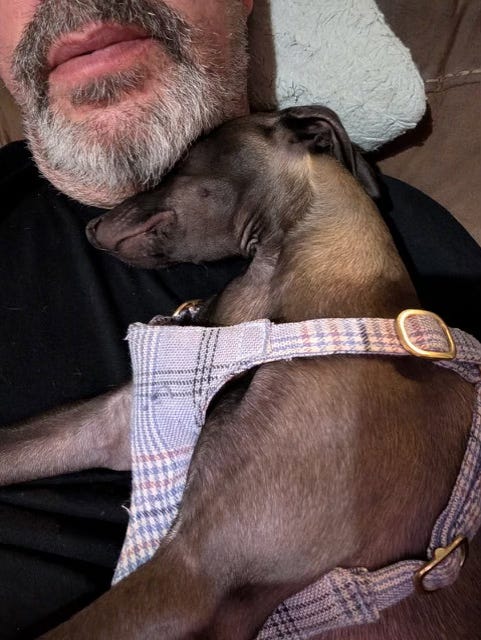
Common nicknames for Italian Greyhounds are “Iggy” and “IG”. Cheryl advises prospective pet parents if you don’t want a dog next to you or behind you all the time, then an Italian Greyhound is not the breed for you. They are even referred to as “Velcro Dogs”. Their sweet, gentle and loving temperament makes it very easy to cuddle up with while enjoying a favorite book.
Italian Greyhounds require a lot of exercise. Cheryl has walked Mia and Luna daily in all kinds of weather since she brought them home. Even when Cheryl was recovering from meniscus surgery, she had family members walk “the girls”. All dogs require daily walks. For some breeds, if they don’t get their walk in, and an outlet is not provided to release pent up energy, they can go a little crazy. Italian Greyhounds would fit that description.
Caring for Italian Greyhounds is fairly easy. The biggest challenge pet parents need to watch for is leg injuries, as their dogs’ legs are very thin and prone to fractures. Pet parents must ensure their dogs don’t jump from excessive heights or run on slippery surfaces.
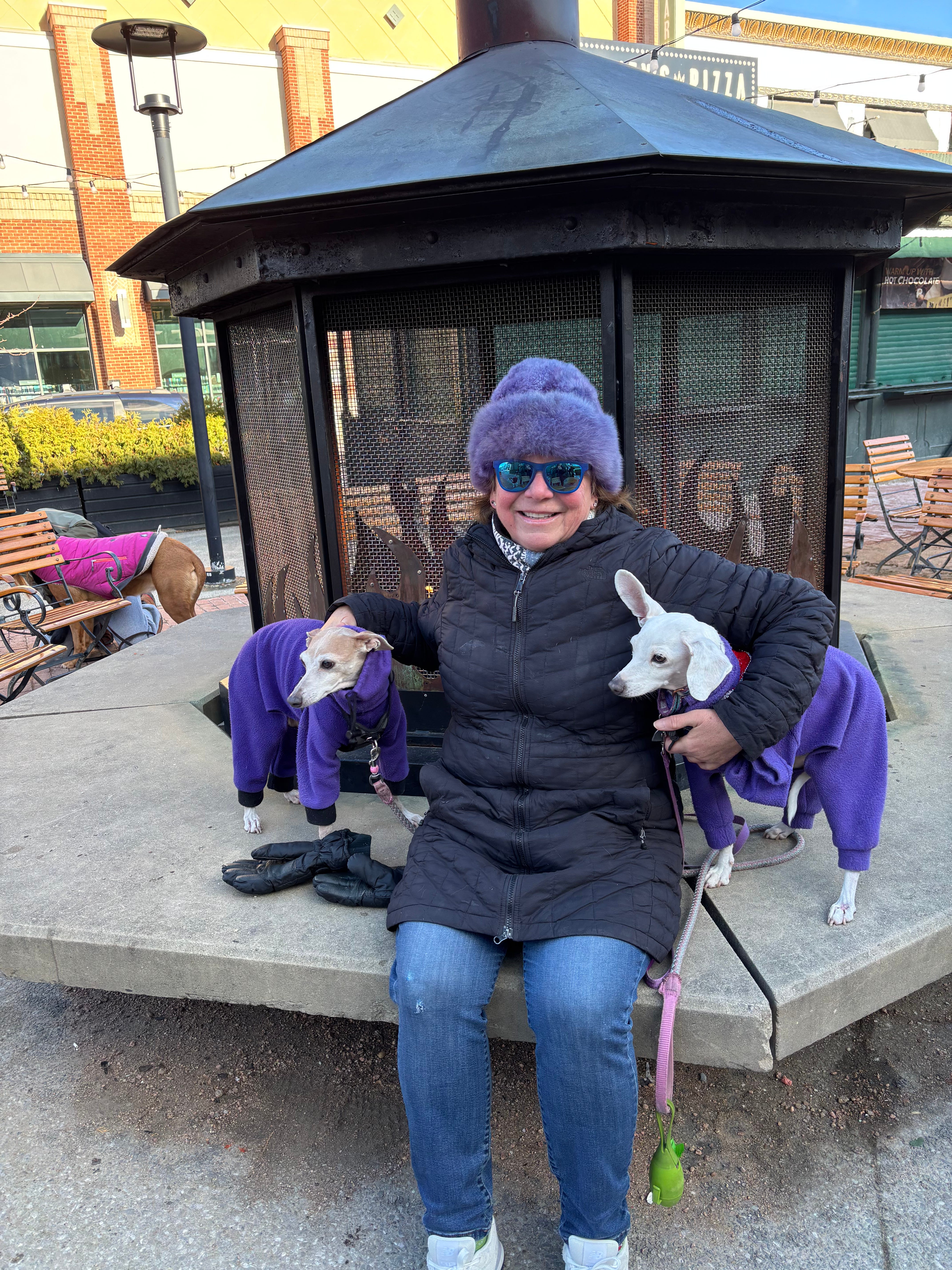
Mia and Luna are bigger than the average size for Italian Greyhounds but still have very low body fat. This combined with their short fur makes them sensitive to cold weather. In the video of the podcast, Cheryl shows the audience the flannel coats that include coverage on their legs and boots for their paws.
Grooming and hygiene are simple. Bathing is recommended only when absolutely necessary so as not to dry out the skin with frequent shampooing. Their nails grow quickly and need to be trimmed often to prevent joint strain on their thin legs. Also, Iggy’s are susceptible to dental disease. Daily brushing and professional cleanings are highly recommended.
About 10 years ago, Cheryl started volunteering for the Italian Greyhound Club of America (IGCA). She fostered a total of at least 5 dogs, but when COVID hit, the restrictions forbade people to visit one another. During this time, Cheryl could not have inquisitive dog lovers come to her home to check out the Italian Greyhounds she was fostering. So, she continued to volunteer by making phone calls to prospective adopters, screening them to ascertain if they were good future pet parents of an Italian Greyhound.
People frequently ask me if I know anyone who is looking for a dog. I never had any luck finding a forever home for anyone, until recently. One of my friends, Dan, called me saying that his friend’s daughter had a 3 month old Italian Greyhound who was just too much for her to handle at this point in her life. She couldn’t provide the exercise and care that was needed and thought it was best to find a better home for him.
I immediately thought of Cheryl in hopes that she could connect me to someone who could help. Instead, Cheryl contacted one of her friends whom she had found an Italian Greyhound for before, just to see if he was in the market for another one. Lo and behold, he was! Within hours, the deal was sealed and Vito was on his way to his forever home soon after.
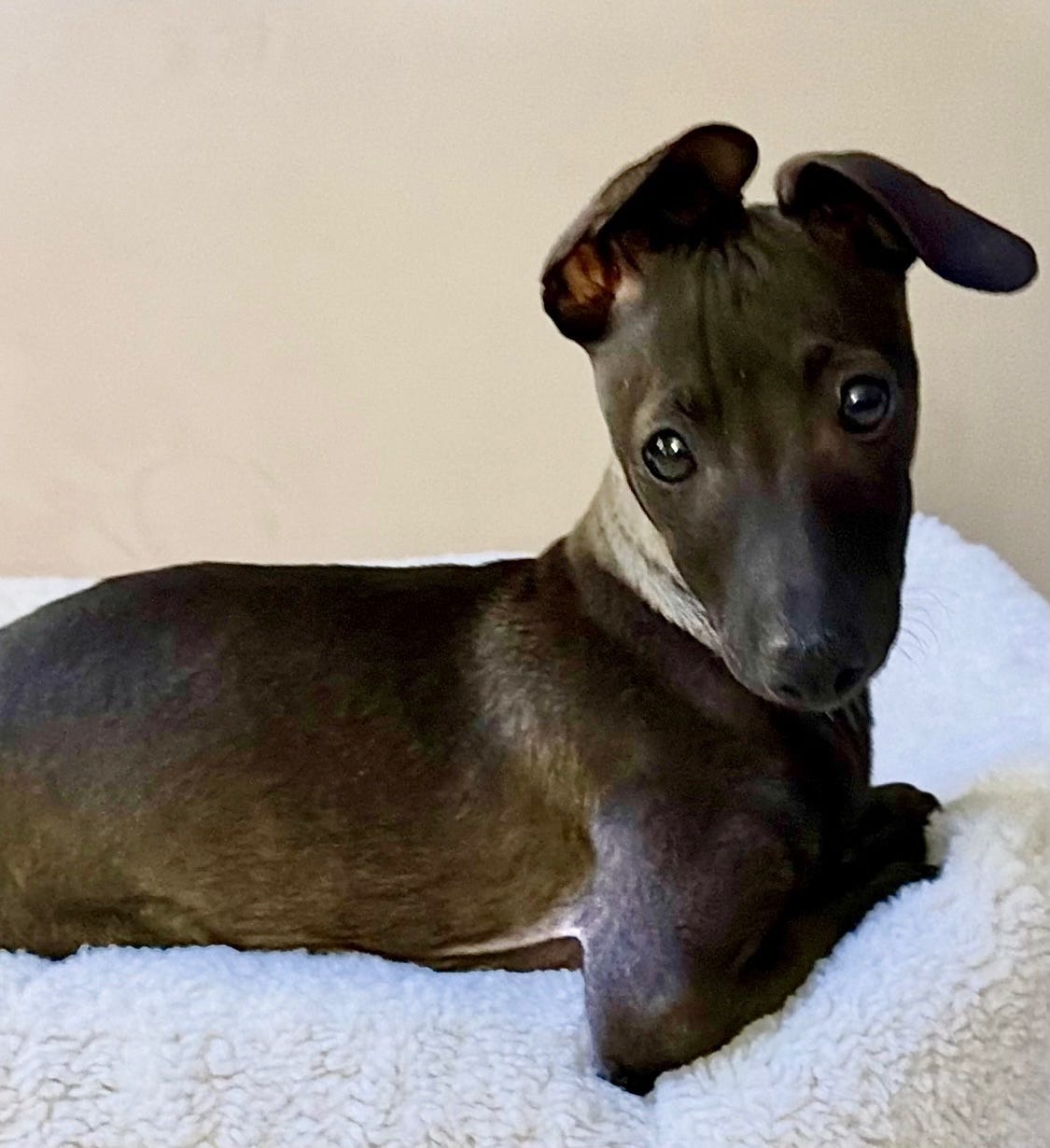
Vito is co-shared by his pet parents and currently resides in two different households with two other Italian Greyhounds named Colby and Roo. They all get along very well. They play and cuddle with each other and their owners. On weekdays, Vito accompanies Keith to work where he has his own little bed. As difficult as it must have been for the original owner to surrender Vito, she can rest assured that he is getting the best care ever. As Cesar Millan always says, “Happy Dog, Happy Human, Happy World”. Who could ask for a better outcome?
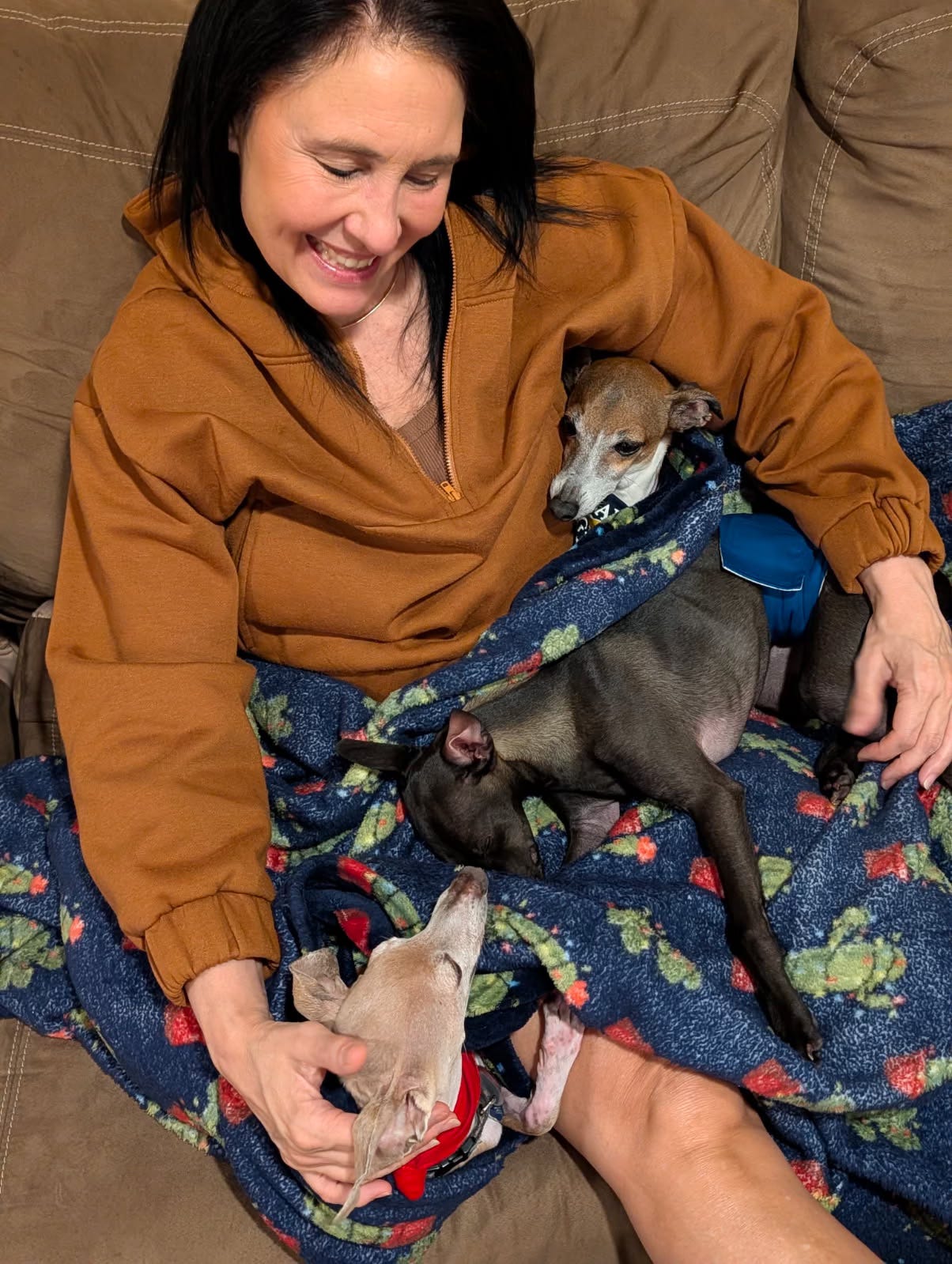
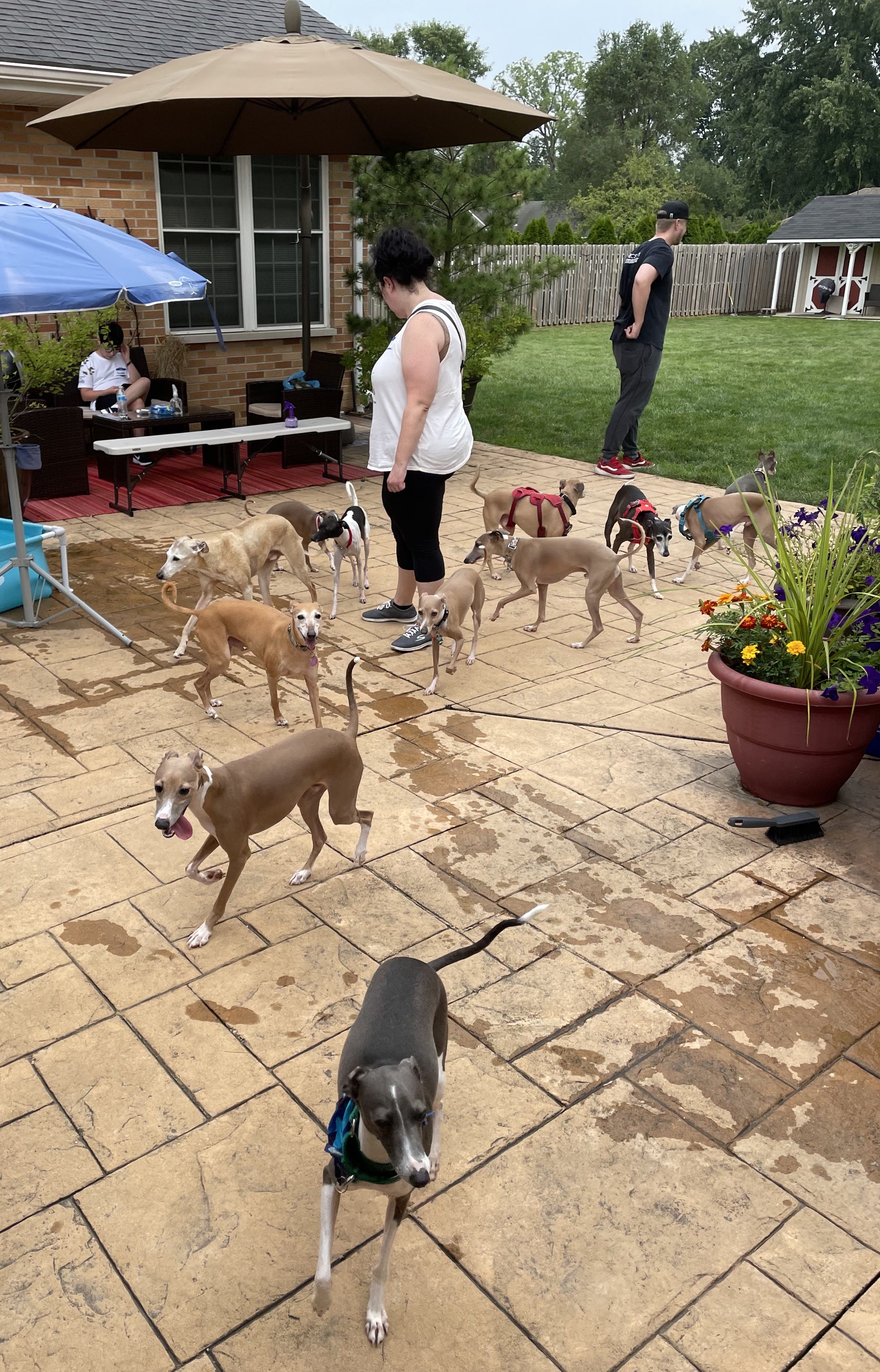
Over the years, Cheryl occasionally has met other people with Italian Greyhounds while out in public. She would exchange phone numbers with them if they were interested in getting their dogs together with other Italian Greyhound owners. Through word of mouth and referrals, this group of 20 meets every other week for play dates. However, due to some health issues “the girls” have had lately, Cheryl hasn’t been able to attend the get togethers. Dog support groups like this one are a fun way to exchange information about the breed and have the dogs interact with one another. Most purebred breeds have clubs nearby where you can meet new people. I highly recommend joining one.
Mia and Luna are considered senior dogs at 13 and 14 years old, respectively. The average lifespan of an Italian Greyhound is between 13 and 15 years old. Just within the past few years, they both started experiencing health issues. Mia was diagnosed with inflammatory bowel disease(IBS) and Luna was diagnosed with cancer in her leg. As with humans, it’s no fun getting old!
Three years ago, Cheryl was noticing that Mia was frequently having diarrhea. Her vet put Mia on prednisone. She remained on that for 3-4 months, but they weren’t seeing the results they were hoping for. Mia was also losing weight. She was already thin to begin with, so losing weight was worrisome. The vet recommended Dr. Crandell, a board-certified Small Animal Internal Medicine Specialist at MedVet in Akron, Ohio. He recommended that Mia start taking a chemotherapy drug called Chlorambucil to treat her IBS symptoms. The dosages have diminished as the years have passed but she will most likely have to remain on it for the rest of her life.
Cheryl has to be very careful what she feeds Mia. Due to her IBS condition, she can only eat a prescription diet where the protein in the food is hydrolyzed. This means that the protein is already broken down so that the dog’s immune system cannot recognize it. This prevents gastrointestinal issues. Royal Canin, Hill’s Science Diet, and Purina all have prescription formulas that your vet can recommend. Cheryl has to alert pet parents not to give Mia any treats. She can only have her diet food as treats. She can also have some fruits and vegetables as treats or mixed in with her food.
Mia gets her bloodwork done every few months to make sure certain levels have not changed. So far, the results have been relatively the same but not enough to go off the chemo drug. Cheryl adds Vitamin B12 and a supplement for liver support called Denamarin to Mia’s food. She keeps a watchful eye on Mia for any changes in her eating habits, behavior, and overall health. She keeps in close touch with her vet to make sure she is enjoying a good quality of life while managing her IBS.
Luna has had her share of health issues in her senior years, the most notable one being her cancer diagnosis. As I mentioned before, Cheryl had meniscus surgery a year ago in April and had family members and friends walk Luna and Mia while she recovered. They would come back from the walk reporting that Luna didn’t want to walk and only wanted to go back home. They thought maybe the reason she didn’t want to walk was because she was separated from Cheryl. However, they also noticed that Luna’s leg was stiffening up. By the end of April, Cheryl noticed that Luna would hold her one leg up periodically and walk on the other three legs. Now Cheryl knew there was something not quite right and had to take action.
Cheryl took Luna to the vet. After the initial visit, Luna was prescribed muscle relaxers to see if that would help, but advised to return in a week. On the second visit, x-rays were taken, but did not reveal anything. The vet recommended to get an appointment with an internist. Cheryl already knew an internist because of Mia’s IBS issues. She returned to the same internist who ordered blood work to be done. Nothing was revealed in the bloodwork. So, he recommended physical therapy.
Cheryl made an appointment with Dr. Letosky at Avon Lake Animal Clinic. She is a veterinarian who specializes in Canine Rehabilitation. Dr. Letosky observed Luna and upon that initial assessment, deduced that Luna had cancer. This was confirmed through an ultrasound which showed her muscles in her left leg were crooked and had pockets of blood that were cancerous. Cheryl noticed that the stiffest area of Luna’s leg was between the knee and elbow joints, which is where the cancer had settled. Treatment options were discussed, but amputation was recommended.
In my May 5, 2026 podcast with Dr. Randy from Animal Clinic Northview, he shares with us the predicament pet parents face when their dog or cat is diagnosed with cancer. Depending on the cancer and where it is located determines the treatment. Chemotherapy, alternative therapies, and amputation are all available options presented to pet parents. Cheryl made the decision to have the leg amputated and Luna has been cancer free ever since.
Cheryl was advised to maintain a physical therapy routine for Luna for the remainder of her life. This is an easy task to fulfill since Cheryl religiously walks Mia and Luna daily. She just has to add hills to the walk to build up Luna’s muscles. In fact, the vet told Cheryl that Luna recovered so well from the amputation because she had walked her so much before the surgery. Her muscles were already strong which helped the recovery period.
Life as a ‘tripod’ has been manageable. Since Luna expends almost three times as much energy as a quadruped, she gets warmer and tired faster than most dogs. Cheryl now has a stroller for Luna for those situations. The stroller also came in handy while Luna recovered from recent eye surgery performed by Dr. Vogel at MedVet. She had a growth removed from her eyelid due to calcium deposits on her cornea. I recently overheard someone talking to Cheryl about Luna and the person was expressing concern and sadness for Luna’s condition. Cheryl had the perfect response, “ Don’t feel sorry for her, say ‘You go girl!’ instead”
Dogs are amazing for so many reasons. Cheryl, Mia and Luna are a loving, bonded trio who take what life throws at them with amazing and admirable coping skills. I believe that owning a dog isn’t always easy and fun. Along the way, obstacles and unexpected challenges can force us to make difficult decisions. How we respond to those moments ultimately reveals our character and the depth of our commitment to our dogs. Unfortunately, some of these decisions ultimately come down to finances. However, being unable to afford an operation is not necessarily a reflection of how deeply someone loves their dog.
“Italian Greyhound”, Lilian Barber, September 28, 2022, www.showsightmagazine.com
“Italian Greyhound&Action history, Wikipedia, June 6, 2026, www.en.wikipedia.org/w/index.php?
“Italian Greyhounds”, American Kennel Club, 2026, www.akc.org/dog-breeds/italian-greyhound/
“Italian Greyhounds”, 2012, www.italiangreyhounds.weebly.com
“Italian Greyhounds”, American Kennel Club, 2026, www.akc.org/dog-breeds/italian-greyhound/
“Italian Greyhound&Action history, Wikipedia, June 6, 2026, www.en.wikipedia.org/w/index.php?


